Few months ago, 65,000 employees of Pakistan united against the privatization of PTCL. This event, at least, will be marked as a historic union in the working class struggle. The workers, once again, expressed a concern to unify in order to protect their rights from the neo-liberal imperial agenda of, specifically, privatization. It would not be late to present one of the immortal stories of the working-class struggle.
The strike by the sailors of the Royal Indian Navy in 1946 is distinguished as a spectacular episode of struggle against the imperialist force of British Raj. Sumit Sarkar refers to the strike as “one of the most truly heroic, if largely forgotten, episodes of our freedom struggle.”
The strike grew out of the entrenched discontent growing calmly inside the sailors against the British officers. Indian sailors were highly disturbed by the discriminatory attitude of British targeted towards them. This attitude was complemented by off-the-cuff remarks of the newly arrived Commander King. He made a remark about Indian Ratings as sons of Indian bitches on a routine visit to the ship known as H.M.I.S (Her Majesty’s Indian Ship) Talwaar, posted to the Bombay Harbor. The arrogant behavior of the officers was becoming unbearable for the well-educated ratings of Talwaar. They tried to protest through the official chancel, and were subsequently threatened.
The spark was the breakfast, unfit for consumption, served on the morning of 18th February 1946 on H.M.I.S Talwaar. The sailors of the ship united and shouted “No food no work”, and launched a peaceful hunger strike. The possibility of a forthcoming rebellion against the rulers was evident to emerge from the nonviolent strike because it was not a matter of food alone.
On 19 February the strike was officially announced to the naval personnel. Sailors on strike started patrolling in Bombay on the captured naval trucks hoisting Red Flag to invite the anti-British sentiments. The news of rebellion came pouring out of the radio station that the rebels managed to take over. The number of naval personnel involved in the revolt saw a sharp incline. Within 48 hours the British government was facing the largest ever revolt in the naval units. 74 ships, 20 fleets, 22 units with 20,000 sailors joined the rebellion. The naval stations included important locations like Bombay, Calcutta, Karachi, Madras, Cochin and Vishapatam. On 20 February, just ten ships and two naval stations were not in complete revolt.
Union Jacks on most of the ships had been replaced by Red Flags, along with flags of other political parties involved in the independence struggle, by the eve of 19 February. A 36 member Naval Central Strike Committee (NCSC) was elected with Signalman M.S. Khan as the President and telegraph operator Madan Singh as the vice-president. The election of a Muslim and a Sikh was a conscious _expression of rejection of division on religious grounds. The committee instantly drew its agenda and put forward demands to the government. One of the priorities of the strike committee agenda was to involve political parties in the movement to gain support.
The role played by the political parties in the rebellion was very disappointing. Instead of connecting this revolt with other strikes taking place in the textile industry, railways, and other industrial sectors, they actively supported the British in suppressing the strike. The Communist Party of India (CPI) lacked the support, strength, and leadership to take any effective measure. Although certain factions supported the rebellion, both Congress and Muslim League detested the event.
Muhammad Ali Jinnah issued a statement from Calcutta, on behalf of Muslim League, calling the strikers to end their action. An important figure of the independence movement, and a leader of the Indian National Congress, Sardar Patel, came up as a negotiator from the British side. According to the Patel, the rebels were “only a small band of insolents, hot headed and insane youngsters (who) are trying to get involved in politics through these acts, when they have nothing to do with politics”.
On 21 and 22 February, the strike committee called for a general strike that received a huge response from public. The influence of the sailors was being perceived as a genuine challenge to the government. As a direct result, the displeasure in the British government in London was increasing. The messages to crush the uprising at once came out from the office of the British Labour Prime Minister Clement Atlee. Admiral Godfrey, the commander of the Royal Indian Navy threatened the rebels to “surrender or perish”.
The British government started an armed struggle against the sailors on 21 February. On February 22 and 23, the imperialist forces martyred 250 sailors and workers. The peaceful strike transformed into an armed struggle. With the chances of an armed suppression increasing, the sailors pointed the guns on ships towards the British Naval Installations and command centers along the coast. They threatened to destroy these bases and installations to defend their comrades in the cities and harbor in case of an armed attack.
Back on the Talwaar the situation gained intensity and tension. Disheartened by the attitude of the leaders of the independence movement, NCSC started to narrow down its options. Assured and persuaded by the Sardar Patel, M. S. Khan proposed surrender that was first rejected by the strike committee. Absolutely demoralized, and isolated, the strike committee later on announced surrender by raising black flags on the morning of 24 February 1946. That marked an end to a chapter that showed the British what laid ahead, if they choose to stay in India.
In a resolution announcing surrender, the revolutionary sailors sent their last message to the general public of India: “Our uprising was an important historical event in the lives of our people. For the first time the blood of the uniformed and non-uniformed workers flowed in one current for the same collective cause. We the workers in uniform shall never forget this. We also know that you, our proletarian brother and sisters shall also never forget this. The coming generations, learning a lesson shall accomplish what we have not been able to achieve. Long live the working masses. Long live the Revolution”.(emphasis added)
Thursday, September 22, 2005


Monday, September 19, 2005
Religious Question
Workers of all Religions Unite and Fight the Rich!
Given this fact, the maulvis should bless our party and movement for continuing this great work. Instead, from the moment when workers began their struggle against the ruling-class, the maulvis came out with fatwas not only against our party and against all working-class leaders. They tried to belittle the working-class leaders in the eyes of the people. Even today, every Friday they never fail to bring forward their political program of Jihad in Kashmir. But they never speak about the struggle of the workers against capitalists, or the struggle of the peasants against the feudals. To the workers they preach that workers must show more humility, patience, and forbearance. They tell the workers not to revolt but to submit obediently. Thus, the maulvis have made themselves the spokesmen of the rich, the defender of exploitation, and placed themselves in flagrant violation with the revolutionary spirit of the doctrines of all the great religions. Why?
This is simply because most mosques are financed by the rich. The mosques have been taken over by the rich. The rich pay for the marbles, the arches, the fine minarets and domes. The rich even pay the salary of the maulvis. The maulvis go to rich peoples houses to teach their children the word of God and receive big salaries for doing so. On the other hand, the maulvis extract money out of the workers. Some maulvis will not perform marriage or burial ceremonies until they have been paid in full. For these individuals religion is no longer a selfless service but a trade. How often do workers have to sell their last possessions just to bury their dead or to marry their children? Still the workers bear their pain with fortitude and courage.
It is true that there are maulvis of an entirely different character. There are some who are full of goodness and pity and who do not seek gain. They are always ready to help the poor. But these are very uncommon. The majority of maulvis bow and scrape to the rich and powerful and silently pardon them for every sin, every depravity, and every iniquity. But with the workers the majority of maulvis behave in a different way. They only think of squeezing them.
Our party and movement never wishes to drive the workers to fight against the maulvis or try to interfere with people’s religious beliefs. Our party and movement uphold the right of all religious communities to the Freedom of Religious practice. No one has the right to persecute or attack the particular religious opinion of others. But when people use religion to fight the workers, then it is our duty to expose their evil designs.
The Political Program of the Religious Parties
The political program of the religious parties does not include the elimination of capitalism that is, the elimination of private property. They want to maintain capitalism because they think it is a very good system. When workers ask them how corruption, poverty, inflation, and unemployment will be eliminated, their only answer is that “once Islam is introduced everything will be fine”. By this phrase they mean that once the ruling-class accept Islam the capitalists will change their attitude towards the poor. In their view it is only a matter of the ruling-class accepting Islam for the poor and the rich to live amicably.
However, what they do not realise is that the capitalist system has its own economic logic that compels the ruling-class to exploit the workers. As we explained earlier, capitalist competition constantly forces individual capitalists to expand, increase their profits, and take over other industries. If one capitalist does not expand and becomes charitable other capitalists will eat him like a shark. Thus, as long as the factories and farms are private property, this competition whereby the big fish eat the small fish cannot stop. As long as capitalism continues the exploitation and poverty of the workers will continue to increase. Thus, even if the ruling-class becomes religious (which is next to impossible), they are part of the capitalist system simply cannot stop exploiting workers and creating poverty and misery.
Sometimes, the maulvis say that they don’t believe in capitalism but in Islam. But this is dishonest because their interpretation of Islam upholds the inviolability of private property. In other words, their interpretation of Islam is compatible with private property and capitalism. In conclusion, they fully uphold private property and capitalism. The reason why religious parties uphold capitalism is that they are mostly based in small traders. Therefore, they are strong upholders of capitalism and private property. However, bigger capitalists continuously crush these small traders. Thus, they are caught in the middle. On the one hand, they want to maintain private-property. On the other hand, bigger capitalists continuously crush them. However, through most of Pakistan’s history they have sided with the rich against the poor.
How the rich use the maulvis to fight the workers!
The rich utilise the services of maulvis to divide the workers along religious lines. Once workers are divided the rich can use them as cannon fodder to fight wars of conquest. In sum, the policy of the capitalists is to create religious hostility between peoples of different religions.
It follows that the aim of the workers should be to create the unity of workers of all religions. Therefore, the policy of the workers is to remove the hostility between religions. In order to remove the hostility between religions, it is important to struggle against all forms of religious oppression. Thus, it is important to uphold the right to the Freedom of Religious Practice. The freedom of religious practice means that no one has the right to forcibly interfere in religious affairs, to destroy madrassas, places of worship, and other institutions, or to violate religious habits and customs, or to repress sacred texts, or to curtail rights. The right of freedom of religious practice means that the people of each religion themselves decide how to arrange their life. It means that the people of all religions are equal.
Does the freedom of religious practice mean that we support every demand of a religious community? No, upholding the right of freedom of religion should not be confused with endorsing the views of religious movements. Sometimes, religion is used as a cover to justify oppressive practices. For example, religion is used as a justification for honour killings and to oppress women. Workers should struggle against all oppressive practices, and should not be fooled when these practices are justified in the name of religion. In conclusion, it is important to draw the distinction between the freedom of religious practice and the program of a workers party. There may be demands that may not be contrary to the freedom of religious practice but are contrary to the program of a workers party.
In conclusion, workers should struggle against all forms of religious oppression in order to bring about the unity of workers of all religions. It follows from this that not only should workers struggle against religious oppression; they should at the same time struggle against the ideas of religious sectarianism. In creating the unity of workers of all religions two errors are possible. Sometimes, workers get so carried away in the struggle against religious oppression that they become religious sectarians. They thus become pawns of the ruling-class of that religious community. Working-class party and working-class organisations should work against any form of organisational federalism, disintegration, or separatism caused by religious sectarianism within their ranks. At other times, workers get so carried away in the struggle against religious sectarianism that they discontinue the fight against religious oppression. They thus become pawns of the dominant religious community.
A new way of fighting the workers!
The maulvis have devised two ways of fighting the workers. Where the working-class movement is weak the maulvis try to crush it by threats of force, slandering them, condemning them and issuing fatwas against them. But where the working-class movement is strong the maulvis hide their real purpose and becomes a false friend of the working-class movement. Thus, you see the maulvis making Islamic Trade Unions in order to catch the fish in their net to teach the workers humility and obedience. True working-class organisations teach the workers that they are equal to the capitalists and they must prepare for a working-class revolution. The false working-class organisations mislead the workers. Therefore, it is important to forewarn the workers against the honeyed words of the false friends of the working-class. The working-class does not fight against religious beliefs. On the contrary, it demands complete freedom of religious practice and the widest possible toleration of every faith and every opinion. But from the moment that the maulvis use their position against the working-class the workers must fight the enemies of their rights and their liberation. For he who defends the exploiters and who helps to prolong this present regime of misery, he is the mortal enemy of the working-class, whether he is in uniform or religious clothes. In conclusion, our goal is to create the solid iron unity of the workers of all religions in order to fight the rich.
Workers of all Religions
Unite and Fight the Rich!!!
[Text taken from the Communist Mazdoor Kissan Party, Pakistan website. The website of CMKP is: www.cmkp.tk]
Thursday, September 15, 2005
Newsday Lies about the Revolutionary Road in Nepal by Li Onesto
http://www.rwor.org/a/014/newsday-lies-nepal.htm
Revolution #014, September 18, 2005, posted at revcom.us
Newsday, a liberal newspaper in New York, recently ran a special nine-part series by Matthew McAllester on the Maoist revolution in Nepal (August 14-17, 2005). Like recent articles in Harper’s 1 magazine and Rolling Stone, McAllester echoes the U.S. State Department, arguing that the Maoist revolution is a horrible and totalitarian thing that must be stopped at all costs. And like most mainstream coverage of the People’s War in Nepal, this Newsday series is based on disinformation, outright lies, and extreme anti-communist hysteria.
There is much to expose about this series and McAllester should really be forced to publicly debate and defend this rather crude piece of reactionary “journalism.” But right now, I want to focus on McAllester’s attack on the revolutionary road being built by the Maoists in Rolpa.
As A World to Win News Service reports, tens of thousands of people have been involved in building a much-needed roadway to be known as Sahid Marg, Martyr’s Highway ( Rolpa, Nepal: Building the road to the future). King Gyanendra’s Royal Army has tried many times to disrupt this project—dropping bombs from helicopters and firing on people working on the road.
But as a 75-year-old man working on the road said, “The new [Maoist] regime has responded to our sentiments, and has tried to make our dreams real, so we are ready even to give our blood for this great campaign.”
This kind of revolutionary enthusiasm and sacrifice is something McAllester can’t understand and cynically attacks. After talking to people in Rolpa he claims this project is nothing but “forced labor.” His capitalist outlook of dog-eat-dog individualism can’t comprehend how people would walk for two days to do volunteer work and that some people would do this, even though the road is “not even routed through their village.” To his way of thinking, if someone is working for no money, if someone is helping to build something that doesn’t directly benefit them—then this must be coercive, forced labor.
When “old women, young men, -mothers, grandfathers, boys and girls” tell him they “were only too happy to help the region’s development,” McAllester can only respond by claiming these people are “repeating a party mantra.” With such cynical contempt for the people McAllester cannot believe—even when he sees it with his own eyes—that the masses of people can consciously remake themselves and the world around them.
McAllester warns that “The scene on the Martyrs Road is a snapshot of what Nepal might look like if the Maoist insurgents ever came to power...” and then talks about how the Maoists could turn Nepal “into the world’s next killing fields.” He doesn’t offer a shred of evidence to support this but poses the question, if the Maoists win, will they “spill oceans of blood”? He hopes this will convince people of the “horror” of communist rule. But what horrifies McAllester is the fact that the Communist Party of Nepal (Maoist) now controls most of Nepal’s countryside and that they are leading millions of people to radically transform their economic, political, and cultural life.
The Maoist revolution in Nepal is bringing into being a whole new revolutionary way of thinking and acting—a revolutionary spirit where thousands of poor peasants are willing to sacrifice their very lives to get rid of the system oppressing them; where people are consciously working to bring into being a whole new way of running society; where people are working together to redistribute the land, get rid of women’s oppression, abolish caste distinctions and give equality to oppressed national minorities.
As a schoolteacher working on Martyr’s Road said,
“If the Maoists seize power centrally, I believe that within ten years Nepal will be changed dramatically. The work the Maoists have initiated in the base areas involving agriculture, industry, education and health is novel, scientific and positive. One cannot underestimate this great work...”
NOTES:
1 See: “Refutation of Harper’s Article on the Maoists in Nepal—Telling Lies in Kathmandu” by Li Onesto, Revolution #7, June 26, 2005, posted at revcom.us
Return to article
This article is posted in English and Spanish on Revolution Onlinehttp://revcom.us/Write: Box 3486, Merchandise Mart, Chicago, IL 60654Phone: 773-227-4066 Fax: 773-227-4497
Revolution #014, September 18, 2005, posted at revcom.us
Newsday, a liberal newspaper in New York, recently ran a special nine-part series by Matthew McAllester on the Maoist revolution in Nepal (August 14-17, 2005). Like recent articles in Harper’s 1 magazine and Rolling Stone, McAllester echoes the U.S. State Department, arguing that the Maoist revolution is a horrible and totalitarian thing that must be stopped at all costs. And like most mainstream coverage of the People’s War in Nepal, this Newsday series is based on disinformation, outright lies, and extreme anti-communist hysteria.
There is much to expose about this series and McAllester should really be forced to publicly debate and defend this rather crude piece of reactionary “journalism.” But right now, I want to focus on McAllester’s attack on the revolutionary road being built by the Maoists in Rolpa.
As A World to Win News Service reports, tens of thousands of people have been involved in building a much-needed roadway to be known as Sahid Marg, Martyr’s Highway ( Rolpa, Nepal: Building the road to the future). King Gyanendra’s Royal Army has tried many times to disrupt this project—dropping bombs from helicopters and firing on people working on the road.
But as a 75-year-old man working on the road said, “The new [Maoist] regime has responded to our sentiments, and has tried to make our dreams real, so we are ready even to give our blood for this great campaign.”
This kind of revolutionary enthusiasm and sacrifice is something McAllester can’t understand and cynically attacks. After talking to people in Rolpa he claims this project is nothing but “forced labor.” His capitalist outlook of dog-eat-dog individualism can’t comprehend how people would walk for two days to do volunteer work and that some people would do this, even though the road is “not even routed through their village.” To his way of thinking, if someone is working for no money, if someone is helping to build something that doesn’t directly benefit them—then this must be coercive, forced labor.
When “old women, young men, -mothers, grandfathers, boys and girls” tell him they “were only too happy to help the region’s development,” McAllester can only respond by claiming these people are “repeating a party mantra.” With such cynical contempt for the people McAllester cannot believe—even when he sees it with his own eyes—that the masses of people can consciously remake themselves and the world around them.
McAllester warns that “The scene on the Martyrs Road is a snapshot of what Nepal might look like if the Maoist insurgents ever came to power...” and then talks about how the Maoists could turn Nepal “into the world’s next killing fields.” He doesn’t offer a shred of evidence to support this but poses the question, if the Maoists win, will they “spill oceans of blood”? He hopes this will convince people of the “horror” of communist rule. But what horrifies McAllester is the fact that the Communist Party of Nepal (Maoist) now controls most of Nepal’s countryside and that they are leading millions of people to radically transform their economic, political, and cultural life.
The Maoist revolution in Nepal is bringing into being a whole new revolutionary way of thinking and acting—a revolutionary spirit where thousands of poor peasants are willing to sacrifice their very lives to get rid of the system oppressing them; where people are consciously working to bring into being a whole new way of running society; where people are working together to redistribute the land, get rid of women’s oppression, abolish caste distinctions and give equality to oppressed national minorities.
As a schoolteacher working on Martyr’s Road said,
“If the Maoists seize power centrally, I believe that within ten years Nepal will be changed dramatically. The work the Maoists have initiated in the base areas involving agriculture, industry, education and health is novel, scientific and positive. One cannot underestimate this great work...”
NOTES:
1 See: “Refutation of Harper’s Article on the Maoists in Nepal—Telling Lies in Kathmandu” by Li Onesto, Revolution #7, June 26, 2005, posted at revcom.us
Return to article
This article is posted in English and Spanish on Revolution Onlinehttp://revcom.us/Write: Box 3486, Merchandise Mart, Chicago, IL 60654Phone: 773-227-4066 Fax: 773-227-4497
Monday, September 05, 2005
Dear Mr. Bush
Dear Mr. Bush:
Any idea where all our helicopters are? It's Day 5 of Hurricane Katrina and thousands remain stranded in New Orleans and need to be airlifted. Where on earth could you have misplaced all our military choppers? Do you need help finding them? I once lost my car in a Sears parking lot. Man, was that a drag. Also, any idea where all our national guard soldiers are? We could really use them right now for the type of thing they signed up to do like helping with national disasters. How come they weren't there to begin with?
Last Thursday I was in south Florida and sat outside while the eye of Hurricane Katrina passed over my head. It was only a Category 1 then but it was pretty nasty. Eleven people died and, as of today, there were still homes without power. That night the weatherman said this storm was on its way to New Orleans. That was Thursday! Did anybody tell you? I know you didn't want to interrupt your vacation and I know how you don't like to get bad news. Plus, you had fundraisers to go to and mothers of dead soldiers to ignore and smear. You sure showed her!
I especially like how, the day after the hurricane, instead of flying to Louisiana, you flew to San Diego to party with your business peeps. Don't let people criticize you for this -- after all, the hurricane was over and what the heck could you do, put your finger in the dike? And don't listen to those who, in the coming days, will reveal how you specifically reduced the Army Corps of Engineers' budget for New Orleans this summer for the third year in a row. You just tell them that even if you hadn't cut the money to fix those levees, there weren't going to be any Army engineers to fix them anyway because you had a much more important construction job for them -- BUILDING DEMOCRACY IN IRAQ!
On Day 3, when you finally left your vacation home, I have to say I was moved by how you had your Air Force One pilot descend from the clouds as you flew over New Orleans so you could catch a quick look of the disaster. Hey, I know you couldn't stop and grab a bullhorn and stand on some rubble and act like a commander in chief. Been there done that.
There will be those who will try to politicize this tragedy and try to use it against you. Just have your people keep pointing that out. Respond to nothing. Even those pesky scientists who predicted this would happen because the water in the Gulf of Mexico is getting hotter and hotter making a storm like this inevitable. Ignore them and all their global warming Chicken Littles. There is nothing unusual about a hurricane that was so wide it would be like having one F-4 tornado that stretched from New York to Cleveland.
No, Mr. Bush, you just stay the course. It's not your fault that 30 percent of New Orleans lives in poverty or that tens of thousands had no transportation to get out of town. C'mon, they're black! I mean, it's not like this happened to Kennebunkport. Can you imagine leaving white people on their roofs for five days? Don't make me laugh! Race has nothing -- NOTHING -- to do with this!
You hang in there, Mr. Bush. Just try to find a few of our Army helicopters and send them there. Pretend the people of New Orleans and the Gulf Coast are near Tikrit.
Yours, Michael Moore
MMFlint@aol.com
www.MichaelMoore.com
Any idea where all our helicopters are? It's Day 5 of Hurricane Katrina and thousands remain stranded in New Orleans and need to be airlifted. Where on earth could you have misplaced all our military choppers? Do you need help finding them? I once lost my car in a Sears parking lot. Man, was that a drag. Also, any idea where all our national guard soldiers are? We could really use them right now for the type of thing they signed up to do like helping with national disasters. How come they weren't there to begin with?
Last Thursday I was in south Florida and sat outside while the eye of Hurricane Katrina passed over my head. It was only a Category 1 then but it was pretty nasty. Eleven people died and, as of today, there were still homes without power. That night the weatherman said this storm was on its way to New Orleans. That was Thursday! Did anybody tell you? I know you didn't want to interrupt your vacation and I know how you don't like to get bad news. Plus, you had fundraisers to go to and mothers of dead soldiers to ignore and smear. You sure showed her!
I especially like how, the day after the hurricane, instead of flying to Louisiana, you flew to San Diego to party with your business peeps. Don't let people criticize you for this -- after all, the hurricane was over and what the heck could you do, put your finger in the dike? And don't listen to those who, in the coming days, will reveal how you specifically reduced the Army Corps of Engineers' budget for New Orleans this summer for the third year in a row. You just tell them that even if you hadn't cut the money to fix those levees, there weren't going to be any Army engineers to fix them anyway because you had a much more important construction job for them -- BUILDING DEMOCRACY IN IRAQ!
On Day 3, when you finally left your vacation home, I have to say I was moved by how you had your Air Force One pilot descend from the clouds as you flew over New Orleans so you could catch a quick look of the disaster. Hey, I know you couldn't stop and grab a bullhorn and stand on some rubble and act like a commander in chief. Been there done that.
There will be those who will try to politicize this tragedy and try to use it against you. Just have your people keep pointing that out. Respond to nothing. Even those pesky scientists who predicted this would happen because the water in the Gulf of Mexico is getting hotter and hotter making a storm like this inevitable. Ignore them and all their global warming Chicken Littles. There is nothing unusual about a hurricane that was so wide it would be like having one F-4 tornado that stretched from New York to Cleveland.
No, Mr. Bush, you just stay the course. It's not your fault that 30 percent of New Orleans lives in poverty or that tens of thousands had no transportation to get out of town. C'mon, they're black! I mean, it's not like this happened to Kennebunkport. Can you imagine leaving white people on their roofs for five days? Don't make me laugh! Race has nothing -- NOTHING -- to do with this!
You hang in there, Mr. Bush. Just try to find a few of our Army helicopters and send them there. Pretend the people of New Orleans and the Gulf Coast are near Tikrit.
Yours, Michael Moore
MMFlint@aol.com
www.MichaelMoore.com
Wednesday, August 31, 2005
Call for Youth Solidarity!

Revolutionary Greetings,
So many deeds cry out to be done, And always urgently;
The world rolls on, Time presses.
Ten thousand years are too long, Seize the day, seize the hour!
Mao Tse-Tung 1963.
There is no doubt that youth have always played one of the most crucial roles in the development of socialist struggle and social change. They have been on the forefront for social change. The youth of Pakistan must also uphold the tradition. They must give a voice to their demand for social justice and equality and end of exploitation of man by man.
We are a group of students from Pakistan who are working to form a youth organization on the communist principles. We are working in collaboration with the Communist Workers and Peasants Party (CMKP). We are hoping that our organization will be setup by the end of September this year. Our mission is to organize the young people of Pakistan in a vibrant movement for socialism.
I hope that you can also work with us and support the revolutionary cause in your region.
I will keep you update with our progress. You can get more information about our activities by visiting http://cmkp.tk or joining our yahoo group at cmkp_pk@yahoogroups.com (http://groups.yahoo.com/group/cmkp_pk/).
Remember, a journey of a thousand miles begins with a single step.
In Solidarity!
Thursday, August 25, 2005
Mass exodus from Cuba to US
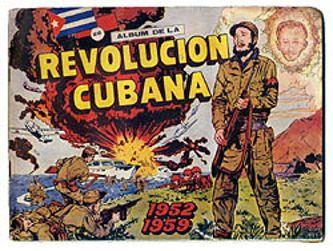
While arguing that Cuban model is one of the best alternatives present for the third world, this is one argument that I have come across the most. “If Cuba is such a heaven, then why does ship loads of people escape to United State?”
L. S. Stavrianos in his book, “Global Rift: Third World Comes of Age”, have also asked similar questions to himself. His questions are, “Does it [exodus] not substantiate the view of the Castro regime as a “totalitarian dictatorship” repressing a “captive people” ever ready to take the first available “freedom flight”?
Lets first of all take a look at the people who migrate in the mass exodus of 1980. A survey by the U.S. Immigration and Naturalization Service (INS) of the first 15,000 émigrés who arrives in April and May disclosed that only 15 percent were black or mulattos, though they comprise 30 to 40 percent of Cuban population. Also, only 15 to 20 percent of the émigrés were from the countryside, as against the 35 percent of the Cuban population that is rural. These figures explain the claim that it is the nonwhite and rural population of the Cuban Society that has made the greatest gains under the revolutionary government. This majority segment of the society was the bottom of the society before the revolution of 1959.
Also illuminating was the contrast between the Cuban and Haitians boat people who landed simultaneously on the Florida beach. The Haitians were generally uneducated, under nourished and unemployed. The left their homeland because their basic needs were not being met. The Cubans, on the other hand, were educated, healthy and employed. The left their homes because of monotonous diet, inadequate housing and limited supplies of clothing and other consumer goods.
The 1980 Cuban exodus was sparked more by the lure of consumerism than by the failure of communism. The American life-style was promoted through effective means of propaganda such as radio and television. The message was persuasive as personal comforts and advancement remained important than collective welfare and goals for many people.
Fidel Castro reacted with his two policies: more stress on material incentives, and correction of bureaucratic abuses and high living. Castro introduced a new salary policy on July 1, 1980, that substantially increased the minimum earnings for Cuban workers with some extra benefits. He also attacked Cuban officials for “using and abusing the prerogative that go with the post and the resources of their enterprise to solve problems of their own and their friends.” It is worthwhile to know that instead of ignoring, Fidel Castro learnt from the events like the exodus and used the lesson for the betterment of the Cuban people and society.
Peter Winn of Yale University said about the 1980 exodus, “If they can confront the current crisis with the same critical and innovative spirit, then the loss of even several hundred Cubans may be more than compensated by the gains of strengthened revolution that the émigrés leave behind.”
Monday, August 22, 2005

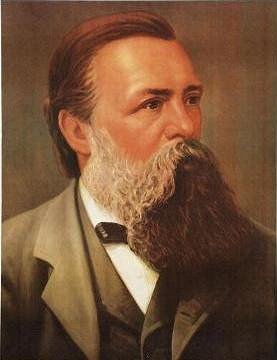
The Principles of Communism
This one single piece of literature encapsulates the worldwide theory of communism. This paper is strongly recommended for a beginner. A set of 25 questions articulate the basics of communism in the simplest manner in layman terms. Enjoy reading this classical communist master piece.
---
1. What is Communism?
Communism is a theoretical statement of the conditions for the emancipation of the proletariat.
2. What is the proletariat?
The proletariat is that class in society which obtains its livelihood wholly and solely from the sale of its labour, and not from the profit of any capital; whose weal and woe, whose life and death, whose whole existence depends upon the demand for labour, and therefore upon the variations of anarchical competition, with its alternations of good and bad periods of trade. The proletariat, in a word, is the working class of the 19th century. [And also of the present time].
3. Has there not, then, been a proletariat always?
No. There have always been poor and working classes - and the working classes have usually been poor. But never before have there been poor men or workers living under such condition as those just mentioned; and there has not, therefore, been a proletariat always, any more than there has been free and unchecked competition.
4. How did the proletariat originate?
The proletariat originated with the Industrial Revolution, which began in England in the later half of the 18th century, and which has since been repeated in every civilised country in the world. The Industrial Revolution was caused by the invention of the steam engine, the various spinning machines, the mechanical loom, and a whole host of other mechanical contrivances. These machines, which being very expensive could only be purchased by men with considerable capital, changed the whole method of production; and supplanted the workers of that day, because they could produce commodities much more cheaply and efficiently than the workers, with their imperfect spinning wheels and looms. The machines, therefore, placed industry entirely in the hands of the capitalists, making the former property of the workers - tools, hand-looms, etc., - useless, and thus leaving them propertyless. The factory system had first been introduced in the textile industry. Work was more and more divided among individual workers, so that he who formerly had completed a whole piece of work, now worked at only one part of it. This division of labour made it possible for products to be turned out more rapidly, and therefore more cheaply. It reduced the activity of each worker to a very simple operation, constantly repeated, which could therefore be performed as well, or even better, by a machine.
Once the impulse was given to the factory system by the installation of machinery, this system quickly assumed the mastery of other branches of industry, e.g. printing, pottery, metal ware. In this way, various branches of industry, one after the other, were dominated by steam power, machinery, and the factory system, as had already happened in the textile industries. But at the same time these industries necessarily passed into the control of capitalists. In addition to actual manufactures, handicrafts also gradually came under the domination of the factory system; since here as well capitalists supplanted the small producers by the establishment of the greater workshop, which saved time and expense, and permitted an increasing division of labour. Thus, in civilised countries, all branches of work and manufacture were replaced by the great industry.
The former status of the workers was entirely revolutionised, and the middle class of the period - particularly the master-craftsmen - ruined; and thus arose two new classes, gradually absorbing all the rest, namely: (i) the capitalist class, which everywhere is in possession of the means of subsistence - the raw materials and tools, machines, factories, etc., necessary for the production of the means of life. This is the class of the bourgeois, or the bourgeoisie; (ii) the working class who, being propertyless, are compelled to sell their labour to the bourgeoisie, in order to obtain the means of subsistence. This class is called the proletariat.
5. Under what conditions does the proletariat sell its labour to the bourgeoisie?
Labour is a commodity, and its price is therefore determined by the same laws as other commodities. Under the system of large-scale industry or of free competition - which, as we shall see, amount to the same thing - the price of a commodity is, on the average, determined by its labour-cost of production. The cost of production of labour, however, is in reality just as much of the means of subsistence as is necessary to keep the worker physically fit, and to enable him to reproduce his kind. The worker will thus receive for this work no more than is necessary for this purpose. The price of labour, or wage, will therefore be the lowest, the minimum, necessary for subsistence.
But trade being at one time good, at another bad, the wage of the worker will vary accordingly, just as the manufacturer receives more or less for his commodities. Just as the manufacturer, however, receives on the average neither more nor less for his commodities than the equivalent of their cost of production, so the worker will, on the average, receive neither more nor less than this minimum of wages. And the more large-scale industry conquers all branches of industry, the more definitely will this economic law of wages assert itself.
6. What was the position of the working classes before the Industrial Revolution?
At different stages of the evolution of society, the working class has occupied different positions in relation to the owning and ruling classes. In ancient times the workers were the slaves of the landowner, as they still are in many backward countries, and even in the Southern part of the United States. In the Middle Ages they were the serfs of the landowning noble, as they are yet in Hungary, Poland and Russia. In the Middle Ages also, and until the Industrial Revolution, there were handicraft guilds in the towns under the control of small masters, out of which developed manufacture, the factory system, and the wage-worker employed by a capitalist.
7. What distinguishes the proletarian from the slave?
The slave was sold outright. The proletarian must sell himself daily and hourly. It is to the interest of the slave-owner that his property, the slave, should have an assured existence, however wretched that may be. The individual proletarian, the property, so to speak, of the whole capitalist class, has no assured existence; since his labour will only be purchased for just the period when someone has need of it. Existence is only assured to the workers as a class. The slave stands outside competition; the proletarian stands within it and suffers all its variations. The slave is regarded as a thing, and not as a member of society; the proletarian is regarded as a human being, and is acknowledged as a member of bourgeois society. The slave may enjoy a more assured existence, but the proletarian belongs to a higher stage of the development of society - stands indeed on a higher level than the slave. The slave can free himself because, of all the private property relations, he need only abolish the single relation of slavery - in this way, indeed, becoming a proletarian; the proletarian, on the other hand, can only free himself on condition that he abolishes private property in general.
8. What distinguishes the proletarian from the serf?
The serf has the possession and use of a means of production - a piece of land - in exchange for a tribute of a part of the produce, or for the performance of work for his lord. The proletarian works with another's implements of production, for the benefit of this other, in exchange for a part of his produce. The serf, therefore, pays; whereas payment is made to the proletarian. The serf has an assured existence; the proletarian has not. The serf stands outside competition; the proletarian within it. The serf frees himself either by running away to the town, and there becoming a handicraftsman; or by making payments in money to his lord instead of labour or payments in kind, thereby becoming a free farmer; or by forcibly ridding himself of his feudal lord, and becoming himself a private owner; in short, by one or other of these means, entering either the ranks of the owners or of the competing workers. The proletarian can only free himself by abolishing competition, private property, and all class distinction.
9. What distinguishes the proletarian from the handicraftsman?
In the old handicraft industries, the workman, after his apprenticeship was served, became a wage worker for a time, but only in order that he might become an employer later. The proletarian is almost always a wage-worker all his life. The handicraftsman who had not yet become an employer was the companion of his master, lived in his house, and ate at his table. The proletarian stands solely in a money relation to his employer. The handicraftsman was a member of the same class of society as his master, and shared the same mode of life. The proletarian is separated from his master, the capitalist, by a whole world of class distinctions; he lives in a totally different environment, and his outlook is totally different. The tools used by the handicraftsman were usually his own property, and he could carry them with him. The machine worked by the proletarian is neither his own property, nor is it ever likely to become such. The handicraftsman usually made a complete object, and his skill in the use of his tools was always an important factor in the making of the product. The proletarian as a rule makes only one part of an article, or even contributes only to one process in the making of a single part, and his personal skill is in inverse ratio to the work done by the machine. The handicraftsman, like his master, was secured throughout his life against hurtful competition by means of guild regulations and trade customs. The proletarian must combine with his fellows, or seek the aid of legislation, in order to avoid being crushed by competition; if he is outbid by other sellers of labour-power, he - and never his employer - is crushed. The handicraftsman, like his master, had a narrow outlook, was thrifty, and disliked new inventions or ideas. The proletarian becomes daily more convinced that the interests of his class are fundamentally opposed to those of his employer; thrift gives place to class-consciousness and the conviction that an improvement in his position can come only by general social progress. The handicraftsman was a conservative even when he rebelled - it was indeed his desire for reaction that usually made him a rebel. The proletarian must inevitably be a revolutionary. The first step in social progress to which the reactionary handicraft spirit opposed itself was manufacture - the subjection of handicraft, master as well as worker, to mercantile capital, which developed later into commercial and industrial capital.
10. What distinguishes the proletarian from the early factory worker?
The factory worker of the 16th, 17th and 18th centuries had usually some implement of production as his own property - his loom or spinning wheels, or a piece of land which he cultivated in his leisure time. The proletarian has none of these things. The factory worker usually lived on the land, in more or less patriarchal[f] relations with his landlord or employer. The proletarian lives mostly in large towns, and stands to his employer solely in a money relation. The factory worker's more personal relations with his master were destroyed by the coming of large-scale industries; he lost what little he still had, and became the first proletarian.
11. What were the immediate consequences of the Industrial Revolution and the resulting division of society into bourgeoisie and proletariat?
Firstly, in consequence of the universal cheapening of all the products of industry following on the use of machinery, the old system of manufacture, depending on hand labour, was completely destroyed. Semi-barbaric countries which had previously remained more or less outside the influence of historical development were now forced out of their seclusion. They purchased the cheaper commodities from England, and allowed their own hand workers to be ruined. So countries which for centuries had made no progress, e.g., India, were completely revolutionised; and even China now advances towards revolution. It has thus come to pass that a new machine, invented today in England, results in less than a year in millions of workers in China being without bread. In this way have large-scale industries brought all the peoples of the earth into close touch with one another; small local markets have been lumped together into a great world market. The path has been prepared for civilisation and progress, since whatever takes place in civilised countries nowadays must react on all other countries; and if today the workers of France or England were to free themselves, revolutions must inevitably follow in other lands.
Secondly, the Industrial Revolution has developed the wealth and power of the bourgeoisie to the greatest possible extent, making it the most powerful class everywhere. It proceeded to get political power into its own hands, superseding the classes which had been predominant previously - the aristocracy, the townsmen of the guilds, and the absolute monarchy representing both. It destroyed the power of the aristocracy by abolishing the right of primogeniture, or the unsaleable character of real property, as well as the various privileges of the nobility. It destroyed the power of the townsmen of the guilds by abolishing all the guild and handicraft privileges. In place of these it established free competition - i.e., a state of society, in which any individual is free to carry on any branch of industry agreeable to him, and in which there is no hindrance to his so doing but the need of the required capital. With the introduction of free competition, therefore, the individual members of society are only unequal in so far as their capitals are unequal; capital is the determining factor, and the capitalists, the bourgeoisie, have become the real ruling class.
Free competition is necessary for the establishment of large-scale industry, since it is the only state of society in which large-scale industry can develop. The bourgeoisie, after it had thus abolished the social privileges of the aristocracy, and the guildsmen, next abolished their political power. Since it had raised itself to the position of the chief class in society, it proceeded to proclaim itself, in political form, as the chief class. It accomplished this by the introduction of the representative system, which depends on civic equality and the legal recognition of free competition. This was bound up in European countries with a constitutional monarchy. In these countries, electors had to possess a certain amount of capital - and were therefore confined to the bourgeoisie. These bourgeois voters elect bourgeois representatives; and these in turn ensure a bourgeois regime. Thirdly, the Industrial Revolution has developed the proletariat to the same extent that it has developed the bourgeoisie. Just in the same ratio as the bourgeoisie has become richer, the proletariat has grown more numerous. The proletariat could only come into being through the power of capital, and capital only increases when it is increasing the number of workers. An increase of the proletariat has therefore gone hand in hand with the increase of capital. At the same time, bourgeoisie and proletariat have both been concentrated in large towns, and this massing of the workers in large numbers has given them a consciousness of their power.
Further, the more this process develops, the more labour-saving machines are invented and utilised, and in this way, as has already been pointed out, wages are reduced to a minimum, and the position of the proletariat becomes more and more unendurable. Thus, by means on the one hand of the growing discontent, and on the other of the increasing consciousness of the proletariat, the way is made ready for a revolution of society.
12. What were the wider consequences of the Industrial Revolution?
By means of the steam engine and other machines, large-scale industry created the means of indefinitely increasing the industrial output, at a diminishing cost both of time and money. The free competition which followed this accelerated production soon produced definite results; a crowd of capitalists seized upon industry, and in a short time far more was produced than was actually needed. The commodities manufactured could not be sold, and a so-called trade crisis occurred. Factories had to be closed, employers became bankrupt, and the workers starved. After a time the surplus products were sold, the factories opened again, wages rose, and trade gradually became more prosperous than before.
But this could not last long. Again, too many commodities were produced, and another crisis occurred, with all the effects of the first. Thus, since the beginning of the 19th century the condition of industry has constantly fluctuated between periods of prosperity and periods of crisis. Such crises have recurred almost regularly every five or seven years; each time resulting in the greatest misery for the workers, and each time stimulating revolutionary tendencies and threatening shipwreck of the whole existing state of society.
13. What is apparent from these regularly recurring business crises?
In the first place, that large-scale industry - although in its earlier stages it had itself given birth to free competition - has now reached a stage at which free competition, so far from being useful to it, is actually a hindrance - a fetter from which it must break free. So long as it is organised on this basis of free competition, large-scale industry can only exist at the cost of a general upheaval every few years, an upheaval which each time threatens the whole fabric of civilisation, thrusting not only the proletariat into misery, but also ruining some section of the bourgeoisie itself. It is plain, therefore, either that large-scale industry must be abolished - which is an absolute impossibility - or that it must develop into a new organisation of society, in which industrial production shall no longer be in the hands of individual owners all competing one against the other, but shall be owned and controlled by society as a whole and shall satisfy the needs of all.
In the second place, it is apparent that large-scale industry, and the tremendous increase in the production made possible thereby, now makes practicable a new order of society in which such a sufficiency of the necessaries of life will be assured, that every member of that society will have leisure and opportunity to develop his natural powers and abilities in comparative freedom: in fact, that those same qualities or aspects of large-scale industry which under our existing social organisation result in misery and instability, could, under another social system, have exactly opposite consequences. It is obvious, therefore:
That from now onwards all our social problems and evils are simply the result of a social system which is no longer adapted to social needs; and
That the only means by which these evils can be abolished, viz., a new order of society, is now close at hand.
14. Of what nature must this new order of society be?
First and foremost, it will take all industry and all branches of production out of the hands of individual competitive owners; carrying on industry by the active participation of all the members of society. It will abolish competition, and put association in its place. Further, since production for individual profit is based upon private property, this latter must also be abolished, and its place taken by the use of all instruments of production, and the division of all products - by communism, in short. The abolition of private property in itself sums up the new order of society, which in itself is the inevitable result of industrial development.
15. Was not the abolition of private property possible at an earlier date?
No. Every change in the social order, every revolution as regards property relations, has been the necessary consequence of new productive powers, which could no longer be adapted to the existing property relations.
Private property itself arose in this way. For private property has not always existed; towards the end of the Middle Ages a new means of production - manufacture - was evolved, which could not be adapted to feudal or guild relations, and which accordingly outgrew and overwhelmed them, producing a new form of property - private property. But for the first stages of development of large-scale industry, no other form of property but private property was possible - no other order of society than one based upon private property. So long as the productive powers only produce enough to satisfy the needs of a given time, without a surplus being available for the augmentation of social capital and the further development of the forces of production, so long must there inevitably be a ruling class controlling and an oppressed class subject to the social productive powers. The creation of these classes depends upon the development of these productive powers. The Middle Ages - the period of agriculture - gave us the baron and the serf; the towns of the later Middle Ages, the guild master, the journeyman, and the day-labourer; the 17th century evolves the manufacturer and the mechanic; the 19th century, the great manufacturer and the proletarian. Up to that time the productive powers were not so widely developed that private property in them were a fetter or restraint upon them. But now, when, owing to the development of large-scale industry, the powers of production are constantly increasing by leaps and bounds; when, moreover, these powers are in the hands of a constantly decreasing number of bourgeois owners, while the great mass of the people become ever more firmly fixed as proletarians, and their condition becomes ever more unbearable; when, finally, these colossal productive powers have grown so far beyond the control of the bourgeois private property owners that they threaten to over-balance the whole social order, now surely, the abolition of private property has become not only possible, but absolutely necessary.
16. Will the abolition of private property be achieved by peaceful means?
That it may be is much to be wished, and the Communists are certainly the last people likely to wish otherwise. But they know that revolutions are not planned arbitrarily and deliberately, having always been the inevitable results of circumstances, and to that extent independent of the will and guidance of individuals or even of whole classes. They see the growing oppression of the proletariat in all civilised countries, and they foresee that sooner or later the proletariat will be forced into active revolution. And in that day Communists will be prepared to defend the interests of the proletariat with deeds as well as with words.
17. Will it be possible to abolish private property at one stroke?
No. Since the existing mode of production must be allowed to develop to a degree at which it can meet the demands of the whole community, it is more probable that even after the revolution has begun the proletariat will only be able to transform society gradually. It can only abolish private property entirely when the mode of production is sufficiently developed to make this possible.
18. What course of development will the revolution have?
First and foremost, it will set up a democratic political constitution, thereby ensuring, directly or indirectly, the political sovereignty of the proletariat.
Directly in England, where the proletariat already form the majority of the people. Indirectly in France and Germany, where the majority consists not wholly of the proletariat proper, but also of peasants and small bourgeois, whose political interests, however, must depend more and more upon those of the proletariat, and who must therefore inevitably submit themselves to the proletarian will. This may indeed involve a second struggle, but the ultimate victory of the proletariat would not be long delayed. A democratic constitution, of course, would be entirely useless to the proletariat if it did not immediately take further measures aimed directly at private property and thereby making the existence of the proletariat more secure. The most important of these measures, as suggested by existing relations, are as follows:
The gradual limitation of private property by means of progressive taxation, heavy estate duties, the abolition of inheritance by collaterals (brothers, nephews, etc.), forced loans, and so forth.
The gradual expropriation of ground landlords, manufacturers, railroad and ship owners, partly through the competition of State industry, partly directly in exchange for assignats (state paper money).
The confiscation of the property of all emigrants and rebels against the majority of the people.
The organisation of work for all the proletariat upon national estates or in factories and workshops, in order that the competition of the workers amongst themselves may be abolished. Private owners, so long as they are allowed to remain so, will be compelled to pay the State rate of wages.
The compulsion of every member of society to work, and the organisation of industrial armies, especially for agriculture.
The centralisation of the credit system and the money market under the control of the State, by means of a national bank with State capital; and the suppression of all private banks and bankers.
The extension of State factories, railroads, and shipping; the bringing into cultivation of all waste land; and the improvement of all land already cultivated in proportion to the increased capital and greater number of workers at the disposal of the nation.
The education of every child in national institutions at the national expense.
The erection of large buildings on national estates as communal dwellings for groups of citizens following industrial as well as agricultural pursuits.
The destruction of all insanitary and badly built slums and dwellings.
Equal opportunities for all children.
The concentration of all means of transport in the hands of the State.
Obviously, all these measures cannot be carried through at once. But one will necessitate another. Once the first attack on private property has taken place, the proletariat will find itself compelled to go ever further, until finally all capital, all agriculture, all industry, all transport, and all exchange are in the hands of the State. All the above measures inevitably lead in that direction, and will be practicable enough as they are proceeded with. Then, if all capital production, and exchange are in the hands of the State, private property has not so much been abolished as been enabled to disappear of itself, money has become superfluous, production so far changed, and mankind so far altered that all remaining forms of the old society can also be permitted to perish.
19. Will this revolution be confined to a single country?
No. Large-scale industry, by creating the world market, has already brought the people of every country (and particularly of civilised countries), into such close touch with each other, that each separate nation is affected by events in any other one. It has further so far levelled social development, that in every country the struggle between the bourgeoisie and the proletariat has become the most important matter of the day. The communist revolution will not merely be national: it will take place simultaneously in every civilised country, that is, in England, France, America, and Germany, at least. It will develop in each country more quickly or more slowly according as that country possesses a more highly developed industry, greater wealth, or more perfected productive forces. It will, therefore, probably come about most slowly in Germany, most quickly and easily in England. It will at once have an important reaction on other countries, altering or accelerating their development. It is a universal revolution, and must have, therefore, a universal sphere of action.
20. What will be the consequences of the abolition of private property?
First, that as society will have taken out of the hands of the capitalists the entire forces of production and means of transport, administering them according to the actual needs of the whole community, all the evils which are at present inseparably bound up with large-scale industries will be done away with. Crises will end; an increased production, which under the existing order would mean overproduction - a very fruitful source of misery - will then not even be adequate, and would need to be increased yet more, since production over and above the immediate necessities of society would assure the satisfaction of the needs of all, and also beget new necessities and the means of satisfying them. It will be the condition and occasion of further stages of progress, and it will bring about their accomplishment without, as hitherto, society having to go through a period of disorder and disorganisation at every new stage. Large-scale industry, freed from the shackles of private ownership, will develop to an extent compared to which its present development will appear as feeble as does the stage of manufacture compared to large-scale industry of today. Agriculture, too, which is hampered by private ownership and the accompanying parceling-out of land, will be improved and developed by the scientific methods already discovered.
Society will be able to regulate production so that the needs of all its members will be satisfied. The division of society into classes with antagonistic interests ceases automatically. The existence of classes has resulted from the division of labour, and the division of labour to which we are accustomed today will come to an end. For in order to raise industrial and agricultural production to the standards already suggested, mechanical and chemical forces will not of themselves be sufficient. The capacities of the men setting those forces in motion will have to be developed in corresponding measure. Just as the peasants and artisans of the past century altered their whole mode of life, and became quite other men, when they were forced into large-scale industry, so will the common pursuit of production throughout the whole of society, and the new developments of production following thereon, necessitate - and produce - a new type of man. Today men are confined to a single branch of production; they are forced to develop one talent at the expense of all the rest, and know only one process, or even one part of a process. But an industrial commonwealth presupposes men whose talents have been developed on all sides, men who will have an intelligent knowledge of the whole business of production. That division of labour which now makes one man a peasant, another a shoemaker a third a mechanic, and a fourth a stock-market speculator, will entirely vanish. Education will aim at enabling young people to go through the whole system of production, so that they can be transferred from one branch to another according as the necessities of the community demand. A communist society will in this way give far more scope for individual development than does the capitalist society of today.
And along with antagonistic classes, the opposition between town and country will disappear. The pursuit of agriculture and industry by the same men, instead of by two different classes, is already a necessary condition of communistic association. The dispersion of the agricultural population, side by side with the growth of the industrial population in the great towns, is the result of an incompletely developed stage both of agriculture and industry, and is, moreover, an obstacle in the way of further development.
The association of all the members of society in a regulated system of production; the increase of production to an extent at which the needs of all will be satisfied; the cessation of a state of things in which the needs of one are satisfied at the cost of another; the abolition of classes; and the full development of the abilities of all the members of society by the abolition of the present division of labour, by industrial education, and by the blending together of town and country - these will be the results of the abolition of private property.
21. How will Communism affect the family?
It will make the relation of the two sexes a purely private relation, which concerns the interested parties and them alone. It can do this because it puts an end to private property and cares for all children alike, thereby doing away with two fundamental characteristics of present-day marriage - the dependence of the wife on the husband, and of the children on their parents. This is the answer to the shrieks of those highly moral philistines who rave about "community of wives." Community of wives is a relation pertaining to bourgeois society, and exists today, in prostitution. Prostitution, however, is based on private property, and falls with it. Communism, therefore, so far from introducing community of wives, abolishes it.
22. How will Communism affect existing nationalities?
"National differences and antagonisms between peoples," says the Communist Manifesto, "already tend to disappear owing to the development of the bourgeoisie, the freedom of commerce, the world market, and uniformity in the mode of production and in the conditions of life corresponding thereto. The supremacy of the proletariat will cause them to disappear still more quickly. United action, on the part of the leading civilised countries at least, is one of the primary conditions for the emancipation of the proletariat. In proportion as the exploitation of one individual by another is put an end to, the exploitation of one nation by another will also be put an end to. In proportion as the antagonism between classes within the nation vanishes, the hostility of one nation to another will come to an end."
23. How will Communism affect existing religions?
"Does it require deep intuition," asks the Communist Manifesto, "to comprehend the fact that man's ideas, views, conceptions, in a word, man's consciousness, changes with every change in the conditions of his material existence, in his social relations and in his social life?.. When the ancient world was in its last throes, the ancient religions were overcome by Christianity. When Christian ideas succumbed in the 18th century to rationalist ideas, feudal society fought its death battle with the then revolutionary bourgeoisie. The ideas of religious liberty and freedom of conscience merely proclaimed the sway of free competition in the realm of knowledge. The Communist revolution is the most radical rupture with traditional property relations; no wonder, then, that its development involves the most radical rupture with traditional ideas."
24. How do Communists differ from Socialists?
The so-called Socialists are divided into three classes.
The first class consists of hangers-on of that feudal and patriarchal society which has already been largely abolished by the development of large-scale industry, and the consequent creation of bourgeois society.
This class, pointing to the evils of existing society, declared that the feudal, patriarchal form of society must be re-established, since it was free from these particular evils. All their proposals are aimed, directly or indirectly, at this object. And these reactionary "Socialists," in spite of the hot tears they shed over the misery of the proletariat, will always be energetically opposed by the Communists, because (1) they strive for something absolutely impossible; (2) they seek to establish the sovereignty of the aristocracy and the guildmasters, with all their retinue of absolute or feudal kings, officials, soldiers and priests - a form of society which was certainly free from the evils of present-day society, but had just as many evils of its own, and held out, moreover, much less hope for the proletariat; and (3) because they reveal themselves in their true colours every time the proletariat revolts, by immediately uniting themselves with the bourgeoisie against the forces of revolution.
The second class of so-called Socialists consists of hangers-on of present-day society, who, being fully alive to the evils of that society, are full of fears for its stability. Accordingly they try to strengthen and maintain the existing form of society by getting rid of its more obvious evils. Their watchword is Reform. And these bourgeois Socialists will also be constantly opposed by the Communists, since they seek to defend the society which the Communists aim at overthrowing.
The third class consists of "democratic" Socialists, who, along with the Communists, are in favour of certain of the reforms outlined in the answer to Question 18; but regard these, not as means of transition to Communism, but as measures adequate in themselves to abolish poverty and misery, and all the other evils of present-day society. These democratic Socialists are either proletarians who have not yet realised the conditions necessary to the emancipation of their class, or they are members of the petty bourgeoisie, a class which, up to a certain point, has the same interests as the proletariat. The Communists will therefore avail themselves of the assistance of this class for the moment, but will not lose sight of the difference of interests which will prevent that assistance being depended upon when the time for action comes.
25. Where do the Communists stand in relation to the other political parties of our times?
The relationship varies in different countries. In England, France and Belgium, where the bourgeoisie is in power, the Communists have many interests in common with the various democratic parties - with the Chartists [n] in England, for instance, who stand much nearer to the Communists than do the democratic petty bourgeoisie, the so-called Radicals. In America, where democratic conditions already exist, the Communists will work with the party which applies these conditions against the bourgeoisie - i.e.., with the Land Reformers.
In Switzerland there are various Radical parties, some of which have progressed further than others, and with which, although they are still somewhat confused in their aims and interests, the Communists can temporarily ally themselves.
Finally, in Germany, a determined struggle between the bourgeoisie and the absolute monarchies is imminent; and since the Communists cannot make their reckoning with the bourgeoisie until the latter has attained power, it is thus to their interest to assist the bourgeoisie in the struggle in order to attack them again as soon as possible on their own account. The Communists will therefore side with the Liberals in opposition to the Government, remembering, however, that the only advantages which the victory of the bourgeoisie would win for the proletariat are (1) greater freedom of discussion and propaganda, thus facilitating the organisation of the proletariat, and (2) the fact that on the day when absolutism fails, the struggle between bourgeoisie and proletariat takes front place. From that day onwards the policy of the Communists will be the same as in the countries where the bourgeoisie already rules.
Sunday, August 21, 2005



Friday, August 19, 2005
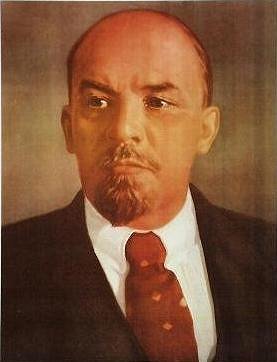
Truth about Stalin
These days I am trying to study Stalin. I want to form an opinion towards Stalin and therefore I am collecting data to understand the principles of Stalin in the appropriate manner.
I am sure about few things though. Western sources can not be trusted with Stalin. There are gross-interpretations in the western books that say that Stalin was nothing but brutal muderer. They even try to associate him with Hitler.
Here is an article by the Communist Party of Peru about Stalin. I will comment on the following article and Stalin later. Have a good reading.
Stalin: A Firm Proletarian Revolutionary
The irrational hatred of Stalin comes from journalists at the service of the imperialist press owned by big monopolies (General Electric, Westinghouse, Walt Disney, Hollywood, Wall Street, Murdoch, Moon, etc.), from reactionary academics, flag-waving historians, from the followers of Krushchev and Gorbachov, the father and disciple of modern revisionism. Without a shred of evidence, these followers of Goebbels and McCarthy allege that Comrade Stalin has murdered 20 million people. It is part of the anticommunist vaccine injected on the American masses, especially the youth, who for so long, have been brainwashed with lies and deception to the point that anticommunism has become a crucial component of the Yankee folklore. However, lately it is not working any longer. People want to know the truth about this great man in world history, the man who fought alongside Lenin, to create the first socialist country, led the dictatorship of the proletariat and built socialism, crushing in the way a myriad of imperialist agresions, schemes, and sabotage of capitalist roaders and infiltrators inside the Communist Party. And why do the modern revisionists such us Khrushchev, Brezhnev, and their disciple Gorbachov, hate Stalin so much? Because that was an excuse to restore capitalism in the former USSR. For revolutionaries, those events have vital importance today since the trumpeted "defeat of socialism" is connected with the way in which socialism develops, and how the proletarian dictatorship is defended. The collapse of the USSR means the failure of revisionism, not the failure of socialism. It is revisionism which has continued its sinister road of capitalist restoration, sinking into the mire of its final bankrupcy. This began with the revisionists in the USSR since 1956, down to the infamous Gorbachov, and in China with Teng Xiaoping since 1976 and recently with the mediocre Jian Zemin.
The Communist Party of Peru, in assessing Comrade Stalin's life, upholds Mao's qualitative and quantitative evaluation on this great leader of the International Communist Movement. It states that Comrade Stalin should be given 70 percent for achievement. His mistakes were mostly theoretical in nature and Stalin himself has criticized them later in his life. Mao pointed out "that Stalin had made certain mistakes. Some were errors made in the course of the struggle; some could have been avoided and some were scarcely avoidable at a time when the dictatorship of the proletariat had no precedent to go by." Mao also noted that "Stalin at times had departed from dialectical materialism and was sometimes divorced from the masses. Generally, the work led by Stalin of suppressing the counterrevolution, of many counter-revolutionaries deserving punishment, were just and correct." The struggle against the bourgeois restoration in the USSR was complex and difficult that only a prolongued cultural revolution would have catch Khrushchev and his gang who were infiltrated in the Party and played a crucial role in the restoration of capitalism in Russia and the split of the International Communist Movement.
Stalin's merits and mistakes are matters of historical, objective reality. A comparison of the two showed that his merits outweighed his faults. He was primarily correct and his faults were secondary.
Stalin failed to admit that classes and class struggle exist in a society undergoing a historical period of proletarian dictatorship, and underestimated the energy of resistance of the bourgeoise that was able to restore capitalism. He believed that the explotitng classes were liquidated and all remaining reactionaries were only hidden people with bourgeois thoughts and morals, and thus failed to see they were right there under his nose, hiding as sneakes in the Communist Party. As Mao said, Stalin also made mistakes on his assessment of the Chinesse revolution, but when practice showed he was wrong, he was able to criticize himself as genuine Marxists do. Have the revisionists Khruschev, Brezhnev, Gorbachov and the like ever criticized themselves after their bloody crimes on the people of the Soviet Union and the world? Never. This is because they attacked Stalin as a pretext to restore capitalism, and thus conscienciously serving imperialism and counterrevolution.
Chairman Gonzalo said in his interview that Stalin was a great Marxist-Leninist, and should be defended by all revolutionaries. Stalin began his revolutionary work as a teenager, and was a member of the Party until the last minute of his life. At the time of the proletarian revolution of February 1917, Stalin was in prison. He was freed, and returned to Moscow immediately to assume his post as the editor of Pravda. Under Lenin instructions, he was also charged to lead the drafting of the first national policy of the Soviet Union after Lenin launched the ideological struggle against the representatives of the bourgeosie within the Bolshevik party, including Trotsky, Zinoviev, Kamenev, Radek, Bukharin among others.
This covered both the economic and political issue concerning the socialist construction. During this time, Lenin developed the outline of construction, and clearly saw the danger that the defeated bourgeoise remained stronger than the proletariat, and will always try to stage a come- back. Lenin died in 1924, too early to solve these problems in practice. Stalin took up that work, and carried out in his lifetime the principal programme points elaborated by Lenin. Thus, Stalin had the task of building socialism in the Soviet Union. The concrete task of developing its economy while facing a hostile capitalist encirclement was enormous. Stalin tackled this task with firmmess and creativity. Because of his deep theoretical understanding of Marxism and his practical abilities Stalin very soon became the acknowledged leader of the Soviet working class and the masses. They recognized that he was carrying out, concretely, the programme laid out by Lenin for the socialism construction. This included the industrialization of the Soviet Union and the collectivization of agriculture.
What was the aim of socialism? It was to build a society free from exploitation of the masses of the people by capital, to build a new society free from poverty, war and oppression. To create a new life for the oppressed masses beginning with the socialist country, and spreading throughout the world. This indeed was Stalin's guiding out look. It contrasted totally with the outlook of world imperialism, which had a long-standing hatred of socialist ideology and the socialist aims of the great founders of socialism Marx, Engels, and Lenin. Imperialism sought to destroy socialism but the socialist state defended itself vigorously, despite the armies of fourteen imperialist countries trying to crush the newborn Socialist Republic of the Soviet Union. They failed because the Soviet masses rallied to the red banner of the proletariat.
Trotsky had been a long-standing opponent of Leninism, both theoretically and practically. Only just before the revolution, did he apply to join the Bolsheviks with a small group of his followers. In actual fact, Stalin had a far wider following than Trotsky within the Communist Party because he was a known Bolshevik from his earliest days and had a umblemished record. In a series of trenchant theoretical articles, Stalin defeated Trotsky ideologically in the period 1925-27 and became the undisputed leader of the Soviet people. He mobilized them under the leadership of the working class to carry out the vast task of industrializing. This was an immense undertaking. It meant building a new economic basis of large-scale industry in which the lack of training of the masses in technology, had to be overcome by organization of education and training classes. This was all taken into account by Stalin, and in 1929 the first five-year plan for the reconstruction and socialization of the Soviet Union was undertaken.
The bourgeois experts in the West laughed at this plan; as if anybody could plan an economy! Certainly capitalism couldn't, its history was one of stop-go development punctuated regularly by economic crises. No wonder they couldn't see any point in trying to plan. But their economy was based on private ownership of the means of production which carried within it, the seeds of capitalist economic crisis. In contrast, the socialist system being built in the Soviet Union was based upon social ownership of the means of production by the working class in the leadership of the masses. That was a decisive difference which made a five-year plan a possibility. It was, for its time, an amazing achievement to be able to develop a planned economy, in the face of a blockade and threats of armed intervention.
The first five-year plan was an enormous success. It began the transformation of the old Russia into a new modern Russia and the reawakening of the Soviet lands. It was no easy task but it was accomplished with tremendous enthusiasm by the masses of the Soviet people. This was an amazing achievement . The imperialist bloc of nations which sought to destroy the Soviet Union and thereby also destroy the socialist movement in their own countries, were responsible through their attacks and blockades by the navies of Britain, France and the United States, for a major famine which killed over five million people. Has anyone ever heard of this in the United States? There is never any mention of this happening. The only things that happened were the killings by Stalin. Of course all of these are authenticated, as one must understand. Authenticated by those who claim the massive killings to be correct. How do they know? Believe it or not, all of these experts, so-called, must have carried out their own body counts. In a moment, we shall consider this question in relation to the collectivization of agriculture, which was the next major step in the transformation of the Soviet Union. Was this industrialization an achievement? Of course, it was a major achievement - but not for the imperialists, but for the masses of the world. They began to rally the flag of Soviet socialism, frightening the life out of the imperialist ruling classes in the West. From the point of view of ordinary people, this was a social order that they could identify with and support, unlike that of capitalism and imperialism.
Such was the enthusiasm of the people for building socialism, and the first five-year plan was completed in four years. But the task remained of bringing agriculture up to the level of a modern industrial state when it consisted of small-scale peasant agriculture handed down from Tsarist times. The main opponents of any change in this situation were the rural capitalists, those of the rural bourgeoisie, who employed wage labor in the countryside and exploited the poor peasants - namely, the kulaks. The kulak through small peasant farming could not solve the food problem in the Soviet Union, and the opinion gradually grew that it was necessary to transform agriculture in the direction pointed out by Lenin, of large-scale collectivized agriculture. Thus, the task begun under Stalin. Of course, the kulaks were violent in their opposition because they could see riches disappearing along the exploitation of labor in the countryside. They carried out uprisings against Soviet power. But the masses, always the masses of poor peasants crushed the kulaks. In a matter of about three years, collectivization was firmly established and collective farms began outperforming the small scale peasant agriculture they were replacing.
All the anti-communists in the West, and there were many, shed cocodrile tears proclaiming that millions of Soviet citizens were being slaughtered and starved to death by Stalin. Was there any truth in this allegation? Of course not. Not even according to bourgeois Western authors such as the British Fabian writers Sydney and Beatrice Webb. They had visited the Soviet Union previously and they visited during the period of collectivization. They interviewed all sorts of people from Soviet officials to foreign correspondents of which there were many. According to their reports in their large two-volume survey of the Soviet Union called Soviet Communism, the great majority of foreign correspondents agreed there was no great starvation. On the contrary, the kulaks themselves were housed and given jobs once they had been moved from the place where they had committed their counterrevolutionary activities. As for the massive number of deaths, according to the Webbs, it was all pure invention. Nobody had any evidence. But that didn't stop the monopoly-owned imperialist newspapers of the capitalist world from making totally unfounded assertions about the millions being killed by starvation and by bullets, all attributed to Stalin.
One of the things they claimed, and was also claimed subsequently by the bandit Khrushchev and his clique in Russia, was that the population had substantially dropped during the collectivization period. This was well known as a fact in the Soviet Union, but it had a totally different explanation from that given by Khruschev and the imperialist world. The great demands for labor during the programme of industrialization, saw masses of peasants move to the cities to take up work in industry. According to historian Andrew Rothsten, the number of workers in industry had been doubled from over eleven million in 1928 to nearly 23 million in 1932.This corresponded roughly with the claims of the professional anti-communists as a drop in population. But where is the truth? The truth is that there was a vast expansion of Soviet industry in those years, and a necessity for a great increase in the availability of labor for industry, which was provided by the movement of peasants from the countryside to the cities. In addition, it was notable that the seven hour day was in general operation, unemployment had completely disappeared, and real wages had gone up by 50 per cent. Compulsory education, introduced after a long period of preparation in August, 1930, had doubled the numbers in elementary schools and trippled those in secondary schools. During the period of the plan, which was a decisive step in the cultural revolution, as Stalin called it. In accounting for the hatred of the imperialists for the Soviet Union, it must be borne in mind that the years of the five-year plans, and a great building up of the Soviet Union in industry, agriculture, education and culture were also years of acute economic crisis in the capitalist world. While most Western economists sneered at the five-year plans there were some more sober heads amongst them. One of these was the British bourgeois magazine The Round Table. In 1932 it wrote:
"The development achieved under the Five-Year Plan is astounding. The tractor plants of Kharkov and Stalingrad, the Amo automobile factory in Moscow, the Ford plant at Nizhni-Nogorod, the Dnieprostroi hydroelectric project, the mammoth steel plants at Magnitogorsk and Kuznetsk in Siberia, the network of machine shops and chemical plants in the Urals - which bid fair to become Russia's Ruhr -these and other industrial achievements all over the country show that, whatever the shortcomings and difficulties, Russian industry, like a well-watered plant keeps on gaining colour, size and strength ... She has laid the foundation for future development . . . and has strengthened prodigiously her fighting capacity. "
The capitalists and imperialists saw the dangers of revolution arising on the one hand from the starvation of masses of people in their own countries, and on the other, from the example of the Soviet Union which was developing its economy and standard of living in leaps and bounds.
It must be noted that in the early thirties the rise of Hitlerism threatened a new war against the Soviet Union, and indeed a European-wide war. This situation hardly passed unnoticed in the USSR. One of the consequences was that people under suspicion of having connection with the Nazis and the Gestapo were arrested and placed on trial. This included a number of people who had been very prominent previously, Trotskyists and Zinoviovites. One of them Sokolnikov, a former ambassador to Great Britain, said 'we considered that fascism was the most organized form of capitalism, that it would triumph and seize Europe and stifle us. It was better, therefore, to come to terms with it'. These terms would have meant the destruction of the Soviet Union and the establishment of a Trotskyist government after a German victory. United States ambassador Davies reported to Secretary Howell on February 17, 1937 that nearly all the foreign diplomats in Moscow who had attended the trial were convinced with him that the defendants were guilty. It was possible that the repression in this period was wider than it should have been. But to put the matter in perspective, it must be remembered that all through the post-Hitler period, the Nazis had made use of a fifth column of supporters inside countries that they were preparing to attack. This is what happened in Spain, and it also happened later in Norway and in various other countries. The fifth column was recognized as a major weapon of Nazism. The Soviet Union was certainly aware of this and undoubtedly the trials were a part of the Soviet state's aim at prevention of a fifth column movement of sabotage within the Soviet Union.
With the threat of fascism hanging over Europe, the Soviet Union conducted a diplomatic offensive and aimed at establishing, if possible, a collective security agreement to restrain Nazi Germany from any military adventurism. Negotiations took place over an extended period of time between the Soviet Union, France and Britain, with the Soviet Union taking the lead in this move. What happened? They were met with continued obstruction by the diplomats of France and Britain. In fact it reached such a stage that in order to satisfy public opinion the British sent a military mission to Moscow for discussions. The only trouble with that it was headed by a sixth-rate civil servant named Strang who had absolutely no authority to conclude an agreement of any kind. The Soviet Union recognized from these stalling tactics that Britain and France did not have the slightest intention of holding up Germany. On the contrary, they were carrying out the old policy of supporting Germany in its drang nach osten, and its push to the East, which they had sought to encourage as the cornerstone of their foreign policy, toward the Soviet Union.
All this was well known to Stalin and the Soviet leadership. At the same time there was a not an inconsiderable part of the ruling cliques of both Britain and France who were not adverse to joining with Germany in a war against the Soviet Union. The net result of these tricky maneuvers was to find its expression in Chamberlain's so called appeasement policy. This was to allow Germany to acquire what territory it wanted eastward provided it didn't move west. This culminated in the Munich Pact just before the war.
The Soviet Union turned its attention to its own defense in the light of Hitler's expansionist policies. At the same time, Hitler engaged in a diplomatic move to avoid a war on two fronts. This was to try for a non-aggression pact with the Soviet Union. Such a pact was indeed signed in August 1939. Immediately, a vast outcry took place in the West claiming that Russia had signed an alliance with Germany. It had done nothing of the sort. What it had done was to sign a non-aggression pact at Hitler's representations - not the Soviet's (similar to those he had already had with China, Poland and other countries on its borders,) which simply consisted of an undertaking, not to invade other countries, and not to support other invaders of the other pact partners. The non-aggression pact was totally misrepresented as a direct blow against Britain and France and a betrayal - though why it should be so considered in view of their duplicity is hard to see - of Western efforts to contain Hitler. There were no such efforts. It became evident that the Chamberlain appeasement policy was a total failure. At the time of the Munich Pact, Chamberlain carried his umbrella off the aircraft returning him from a visit to Hitler declaring 'peace in our time' .He should have said 'war is coming'. Instead of Germany turning East as plotted by Western imperialism, it turned West. The sword turned into the imperialists' hands. In 1935, Stalin had already made the Soviet foreign policy perfectly clear in a speech made to a party congress. He said: 'Our foreign policy is clear. It is a policy of preserving peace and strengthening commercial relations of all countries. The USSR does not think of threatening anybody let alone attacking anybody. We stand for peace and champion the cause of peace. But we are not afraid of threats, and we are prepared to answer the instigators of war, blow for blow. Those who want peace and seek business relations with us will always have our support. But those who try to attack our country will receive a crushing repulse ...' The enormous labor of the Soviet people in the first five-year plan were clearly transforming the face of Russia. It was a necessary strengthening of the economic underpinnings of Soviet society and a preparation for its defense. At that time in 1931, Stalin spoke to a meeting of industrial managers in Russia saying: 'Those who fall behind get beaten. But we do not want to be beaten. No, we refuse to be beaten! One feature of the history of old Russia was the continual beatings she suffered for falling behind, for her backwardness. She was beaten by the Mongol Khans. She was beaten by the Turkish Beys. She was beaten by the Swedish feudal lords. She was beaten by the Polish and Lithuanian gentry. She was beaten by the British and French capitalists. She was beaten by the Japanese barons. All beat her - for her backwardness: for military backwardness, for cultural backwardness, for political backwardness, for industrial backwardness, for agricultural backwardness . . .
'We are fifty or a hundred years behind the advanced countries. We must make good this distance in ten years. Either we do it, or they crush us.' He was a true prophet. Ten years later the Soviet Union was invaded by German imperialism in the character of Nazi, Hitler dictatorship.
On June 22nd, 1941, the Red Army was attacked on a front of 1,900 miles by 170 picked divisions, which not only had enormous bases of munitions and other supplies, but also had battle experience and victorious campaigns against many other European armies. Moreover, the armies of Finland, Hungary, Rumania and Italy were under German command at the Soviet front. The slave labor and industrial resources of 250 million inhabitants of occupied Europe were still at the disposal of the invader. Whether detailed knowledge of German invasion plans would have made much difference is hard to say. The fact was that Stalin tried to avoid giving Germany a pretext for denouncing the Pact and attacking. However, the preparations made for defense did bear fruit. While the Germans made big advances initially, they came to a halt at the environs of Moscow and Leningrad, two of Hitler's principal targets. The masses rallied to Stalin's call for all-out defense of their territory. The Wehrmacht was rolled back. Of course, as became clear later, millions who were under the rule of the Nazis were murdered - an estimated 20 million. In all probability, these are part of the 50 million supposedly killed by Stalin. They were, as it happened, killed by Nazis.
In the 1930s a Western campaign was begun about forced labor in labor camps. Molotov rebutted all the fantastic claims in a speech in 1931. Sure, he said, we used forced labor to rehabilitate criminals, giving them training and material support. But he punctured the stories of 'slave millions' with precise figures. He noted: 'In all the camps (housing a total of over 60,000) the working day has been set at 8 hours for the convicts. While receiving ample rations, and also monthly wages from 20 to 30 roubles in cash, the amount of work required from the convicts did not exceed that of the free laborer' .There was a good deal more of such openness. But no-one would believe it today, in the light of the so-called 'gulags' of Solzhenitsyn - a long-time anti-communist, who wanted Nazi Germany to win the war. No doubt life was harder for the prisoners during the war - but don't forget that it was harder for everyone during that time.
As the war progressed, German armies had to go on the defensive, and were defeated in Stalingrad, where they were encircled and forced to surrender. Stalingrad has since been regarded by all military experts on both sides as the turning point of World War II. But who knows about that achievement today? That sort of news is suppressed. Still if you add up the 27 million dead and add on to that another 20 million supposedly killed in the collectivization of agriculture one can perhaps see where the figure of 50 million killed by Stalin came from. Of course, it matters not to professional anti-communists that 27 million of those lost their lives in repulsing, and eventually conquering Nazi Germany.
Not so long ago the fiftieth anniversary of the defeat of Nazi Germany was celebrated. The British claimed that they had won the war. The Americans claimed that they had won the war. Those claims were very far from the facts. By far the great bulk of the German army was destroyed by the Soviet forces. Churchill himself declared that 'The Red Army tore the guts out of the Wehrmacht' .However, it seems that the British and French imperialists would have preferred Russia to have been beaten by Germany, in order to crush socialism. It didn't happen. It became clear well before the end of the war that whether or not there was a second front, the Russians were quite capable of defeating the German forces on their own. Understanding this, the other allies decided that they had better create a second front, so that they could claim a share in the victory.
As for the attitude of the workers and peasants of the Soviet Union, had they been so opposed to Stalin and to the leadership of the communists never would have supported as they did to the defense of the major cities in Russia. As it was, the great mass of the working people of Leningrad fortified their suburbs and areas under German bombardment, withstood the siege of Leningrad lasting for three years and despite the loss of a million out of their 3 million population, never dreamt of giving in. A similar tale could be told of Moscow, although it did not suffer the same sort of siege.
Eventually, the other allies of the Soviet Union opened a second front in June 1944, but after making initial advances they got bogged down against some armored columns under Von Rundstedt. They began to be thrown back in disorder. At that time Churchill cabled Stalin asking for an early resumption of Soviet advances on the Eastern front, to relieve the pressure on British and American forces. Stalin cabled back immediately informing him that this would be ordered and done. Churchill referred in a cable to Stalin that this was a 'thrilling message', and indeed the Soviet advance resumed, and saved the British and Yankee armies from utter rout.
1945 saw the conclusion of the Potsdam agreement between the big three, Britain, the US and the USSR. This was to determine the control of Germany, and indeed of most of Europe after the war's end. In the interim period, Roosevelt had died and Truman then Vice-President, became President. What was his attitude? In an interview with the New York Times immediately after the German surprise invasion of the Soviet Union, he had declared that the United States now ought to help 'whatever side seemed to be losing. If we see that Germany is winning we ought to help Russia, if Russia is winning we ought to help Germany, and in that way, let them kill as many as possible'. Such was the hatred of imperialism for the Land of Socialism.
The Potsdam conference saw the reversal of Roosevelt's policy of reasonable friendship with the USSR to a policy of outright hostility bolstered by the sole possession by the US of the newly-developed atomic bomb. This gave them confidence that they were too powerful now for the Soviet Union to oppose. Stalin made no attempt at a militaristic reply. On the other hand in response to US threats of 'preventive war,' he answered 'the Soviet people have strong nerves'. A great deal of tension ensued over Germany and over Eastern Europe where people had risen against the pro-fascist regimes they labored under, and established a system of people's democratic rule - not socialism.
Under Stalin's leadership, the Soviet Union began the enormous task of rebuilding the destruction by the Nazis of their great industrial base in the west, which had been occupied by the Wehrmacht . By 1931 this enormous task of reconstruction had been more or less completed. It was at that time that Stalin died. Soon after, Khrushchev and his bourgeois gang surfaced to the open light and maneuvered their way into power and began a violent attack on Stalin and the socialist order. At the time of the Twentieth Congress of the Communist Party of the Soviet Union, Khrushchev delivered a "secret report" [in quotes because it was given to the imperialist powers in advance] in which he slandered comrade Stalin and totally negated any achievements of the socialist construction under Stalin. This was wonderful grist to the mill of imperialist propaganda - in fact, they could not have asked for anything better. It became evident to Mao Tse-tung and the leadership of the Communist Party of China that Russia had entered a period which would lead to the restoration of capitalism, and in fact, Mao Tse-tung said as much soon after the Twentieth Congress. This Congress totally denied all the major policies of Leninism, which Lenin and Stalin had endeavoredt. What was Mao's view? In the 1960s a great ideological struggle broke out between the Marxist-Leninist party of China and the revisionist leadership of the Soviet party and state headed by Khrushchev. Mao accused Khrushchev - rightly - of attempting to destroy Stalin and socialism at one blow. He recognized that Stalin had made errors, and he pointed out what these errors were, but he also gave an accurate judgement on Stalin. In the pamphlet On the Question of Stalin Mao wrote of Stalin's achievements in completing the industrialization of the Soviet Union and collectivization of agriculture. He also said: 'Stalin led the CPSU, the Soviet people and the Soviet army in an arduous and bitter struggle to the great victory of the antifascist war.'
Mao said that Stalin made an indelible contribution to the international communist movement in a number of theoretical writings which are immortal Marxist-Leninist works . . . 'Stalin stood in the forefront of the tide of history guiding the struggle, and was an irreconcilable enemy of the imperialists and all reactionaries'.
Today, revisionist all over the world, especially Yankee revisionists, have been shifted off their old basis of beliefs and have virtually accepted the gigantic tissue of lies woven about Stalin by world imperialism. It seems that they do not stop to think of what the alternative to imperialism is. When the revisionists allege that socialism is not able to replace imperialism, that is support for the idea of imperialism and exploitation, hunger, poverty, war, being eternal. There is nothing Marxist, Leninist and Maoist about such ideas, not in the slightest. But yet that is the objective position of many weak supporters and callous revisionists today. To understand what went wrong in the Soviet Union and why capitalism was restored there one needs to study Mao and Chairman Gonzalo of the PCP who analyzed the situation thoroughly. History has proven the truthfulness of Mao thesis that a new bourgeoisie, under new forms and methods, were developing even under the dictatorship of the proletariat and it was necessary to undergo several cultural revolutions to maintain the socialist course. The new bourgeoisie consisted of highly-paid bureaucrats, managers of state enterprises, professional people divorced from the masses, and a labor aristocracy based on excessive incentive payments. This privileged stratum constituted the social basis of Khrushchev and his revisionist clique, who were protected and were able to disguise themselves with the party card. Today they have emerged in Russia as capitalist fungus who will again be swept away, by the Soviet masses.
Today, revolution is the main political tendency in the world, and the struggles against imperialism are being carried out in different degrees all over the world. The People's War in Peru, led by the Communist Party of Peru and its undeated ideology Marxism-Leninism-Maoism, Gonzalo Thought, is leading the World Proletarian Revolution, as a great example to follow by the oppressed people in the world. The loss of China and the Soviet Union is temporary, and at the end, socialism will triumph because it is the only system that can replace the moribund and canning imperialism, which will not die by itself, but by developing revolution in the form of the People's War, in every country in the world. As Chairman Gonzalo teaches: "all of us will enter communism or no one will."
Prensa Proletaria Internacional.
Subscribe to:
Posts (Atom)
